


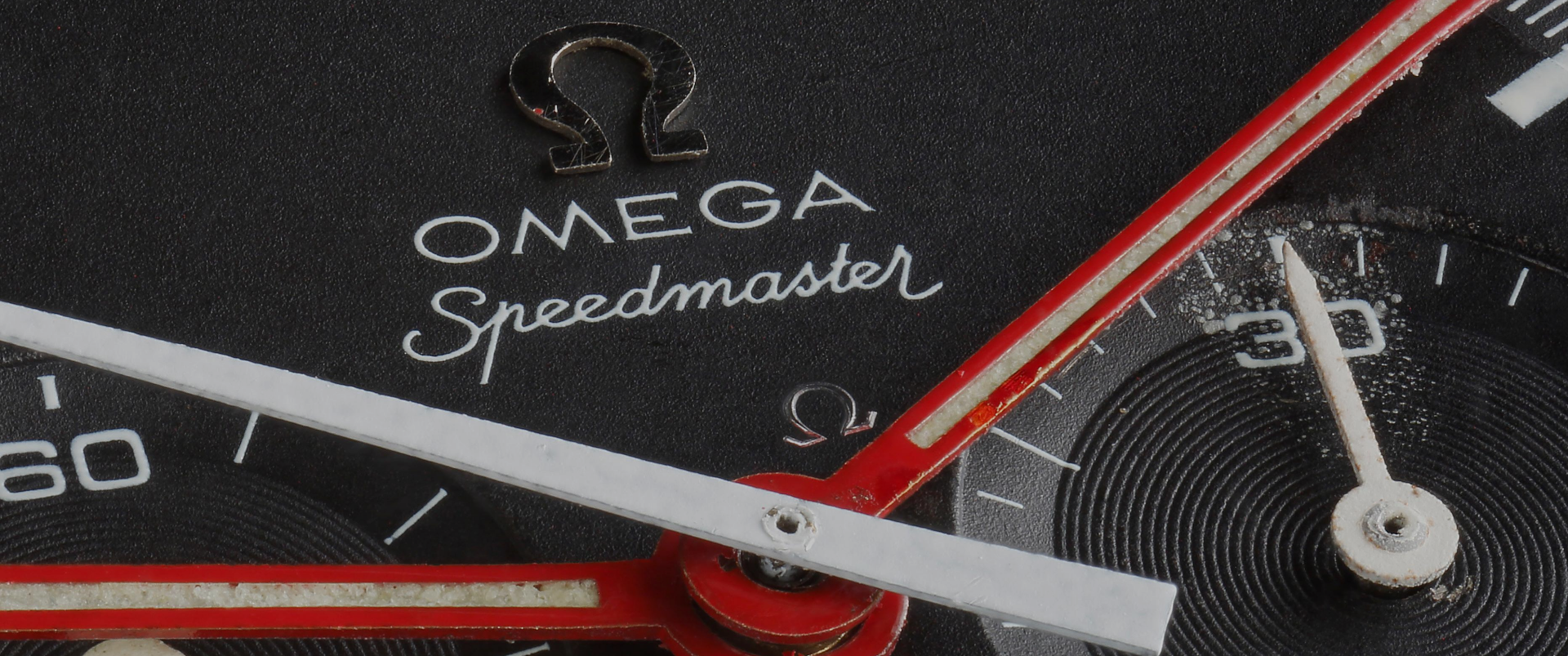
Tropical dial watches: what they are, how they form, and why collectors obsess over them

In the world of vintage watches, there are characteristics that, found on a new timepiece, would be considered production defects. Yet on certain historic examples, those very same characteristics become elements of extraordinary fascination, capable of multiplying a watch's value exponentially.
The tropical dial is the most emblematic example of this paradox. A dial that has changed color over time, often transitioning from its original black to shades of brown, chocolate, tobacco, or coffee, is today one of the most coveted and discussed elements in the entire universe of watch collecting.
But what exactly is a tropical? How does it form? How do you recognize one? And above all: why is it worth so much?
What a tropical dial is: a definition
The term "tropical" is used to describe a vintage dial that has undergone a chromatic transformation over the years, shifting from its original coloration — usually black — to warmer hues ranging from light brown to dark chocolate, tobacco to espresso, and in certain extreme cases to near-orange or amber tones.
The term likely originates from an association with hot, humid climates, initially thought to be responsible for this transformation. Although we now know the causes are more complex (more on this shortly), the name stuck and has established itself as a universally recognized technical term in collector parlance.
Not every dial that changes color is called a tropical: the term applies specifically to those dials where the transformation has produced a uniform, rich, and visually compelling patina. Simply faded, deteriorated, or damaged dials do not qualify.
How a tropical dial forms: the science behind the phenomenon
For many years, the exact origin of the tropical phenomenon remained the subject of speculation and more or less well-founded theories. Today, thanks to more systematic research in the sector, the picture is clearer — though not yet fully definitive.
The role of original varnishes and materials
The primary cause appears to be the chemical composition of the materials used for dial finishing in certain historical periods, particularly between the 1950s and the early 1970s. Some manufacturers used lacquers or varnishes with organic components that, over time, were subject to oxidation and molecular degradation.
This chemical degradation — triggered and accelerated by factors such as ultraviolet light, heat, humidity, and sometimes gases forming within the watch case — produced a progressive transformation of the pigmentation, giving the dial those warm, deep tones we now call tropical.
Why do only some dials turn tropical?
Not all dials from the same model and same period become tropical: this is one of the most fascinating and mysterious aspects of the phenomenon. The most likely explanation lies in minor variations in the chemical composition of lacquers used in different production batches, or in differences in environmental exposure during the watch's lifetime.
This also explains why tropical dials are so rare: they represent a fortunate combination of specific materials and particular environmental conditions, not convincingly reproducible artificially.
How to authenticate a tropical dial
As prices for tropical dials have risen sharply in recent years, so has the circulation of dubious or altered examples. Knowing how to recognize an authentic tropical is now a fundamental skill for anyone looking to buy in this segment.
Characteristics of an authentic tropical dial
-
Uniform gradation: an authentic tropical has even coloration, without sharp staining, artificial halos, or visible discontinuities
-
Depth of color: tropical patina has an almost three-dimensional quality, with a chromatic richness impossible to achieve with surface paints
-
Consistency with the rest of the watch: movement age, case wear, and the watch's history must be coherent with the dial's patina
-
Intact indices and printing: on an authentic tropical, the original printed text (brand, model, functional indications) should be preserved and legible
-
Absence of recent treatments: no signs of aggressive cleaning, refinishing, or recent cosmetic intervention
Red flags: what should raise suspicion
-
Irregular color with visible spots or halos
-
Patina confined only to certain areas of the dial
-
Chemical smell or abnormally glossy appearance
-
Inconsistency between dial color and apparent age of the rest of the watch
-
Undocumented provenance or unclear ownership history
The brands and references most sought after in tropical versions
Not all references produce tropical dials with the same frequency or the same impact on value. Certain brand-model combinations are particularly coveted.
Rolex
Rolex is the brand where tropical dials have the most significant price impact. The Rolex Submariner — particularly references 5512 and 5513 — with a tropical dial is one of the most sought-after pieces in the entire vintage market. The same applies to the Rolex GMT-Master 1675 and the Rolex Daytona in its various manual-wind references. An authentic tropical Submariner can be worth double or triple that of an identical piece with an original black dial in comparable condition.
Omega
Omega also produces tropical dials of great fascination, particularly on the early Speedmaster Professional and the Seamaster 300. The Omega collecting community pays close attention to this phenomenon — the Magister book, written by Andrea Foffi himself, documents in detail many Speedmaster examples with notable characteristics of this kind.
Heuer and other sports brands
Vintage Heuer chronographs — particularly the Carrera and Autavia — sometimes present dials with characteristics similar to tropical, though the phenomenon is less widespread and the market values it somewhat differently compared to the brands mentioned above.
Discover the Heuer Camaro Champion Logo on our Website!
What a tropical dial is worth: the market premium
The tropical market is one of the most volatile and fascinating segments of vintage watchmaking. The premiums relative to the same models with a non-tropicalized original dial can be enormous.
For the most sought-after Rolex references, an authentic, aesthetically beautiful tropical dial can bring the watch's value to 2x to 4x that of a comparable non-tropical example. At international auctions, certain Rolex Submariner pieces with tropical dials have reached extraordinary prices, confirming this is not a passing fashion but a recognized and consolidated characteristic in the market.
It is worth emphasizing that value depends not only on the existence of the tropical patina, but on its aesthetic quality: a uniform, rich, and beautiful patina is worth far more than an irregular or partial transformation.
Conclusion: the tropical as a philosophy of vintage collecting
The appeal of the tropical dial goes beyond mere economics. It represents one of the purest expressions of the vintage collecting philosophy: the passage of time not as deterioration, but as enrichment. A watch that bears the marks of the years lived is not less beautiful — it is richer in history.
In a market where replicas multiply and aggressive restorations erase the past, an authentic tropical is an irreproducible testimony to a piece's authenticity. This is why the most discerning collectors seek them out with such determination.
And this is why, when you encounter an authentic one, it is difficult not to be completely captivated.
