


Unpolished vintage watch cases: a technical guide to value

In the global market for high-end vintage watches, the valuation matrix has undergone a major paradigm shift. While cosmetic restoration and mirror-polishing were once standard procedures to make an old timepiece look new, the preservation of original factory metal is now the single most critical factor in asset valuation. The term unpolished does not merely imply a scratch-free surface; it serves as a certificate of structural and geometric integrity, proving the case remains exactly as it left the manufacture.
A vintage reference retaining an untouched case can command a price premium exceeding 50% over an identical counterpart that has been repeatedly subjected to workshop polishing wheels. Understanding and analyzing this high-level technical distinction is paramount for any collector looking to navigate the market with financial and historical security.
The physics of polishing: metal depletion
Every time a gold or stainless-steel case undergoes commercial polishing with high-speed buffing wheels and abrasive compounds (such as chromium oxide or jeweler’s roulette), a micro-layer of material is permanently stripped away. This aggressive process rounds sharp edges, flattens native contours, and alters the metal’s surface tension. In vintage horology, losing just a few microns of metal completely distorts the proportions originally executed by period designers.
The 4 crucial markers to identify an unpolished Case
To verify that a vintage watch has escaped mechanical alteration over the decades, experts cross-examine four specific structural areas:
1. Chamfers and Bevels
On iconic sports references manufactured by Rolex between the 1950s and the late 1970s (such as Submariner references 5513 and 1680, or GMT-Master reference 1675), the lugs feature a distinct 45-degree angled cut transitioning from the brushed top surface to the mirror-polished flank.
-
On an unpolished case: the chamfer remains razor-sharp, perfectly uniform in width from the base of the lug to its intersection with the case middle. Light reflections off this surface are dead linear, without any wavy distortions.
-
On a polished case: the sharp boundary line becomes rounded, soft, or entirely eroded, blending the brushed top directly into the side profile.
2. Omega and Heuer "Lyre Lugs"
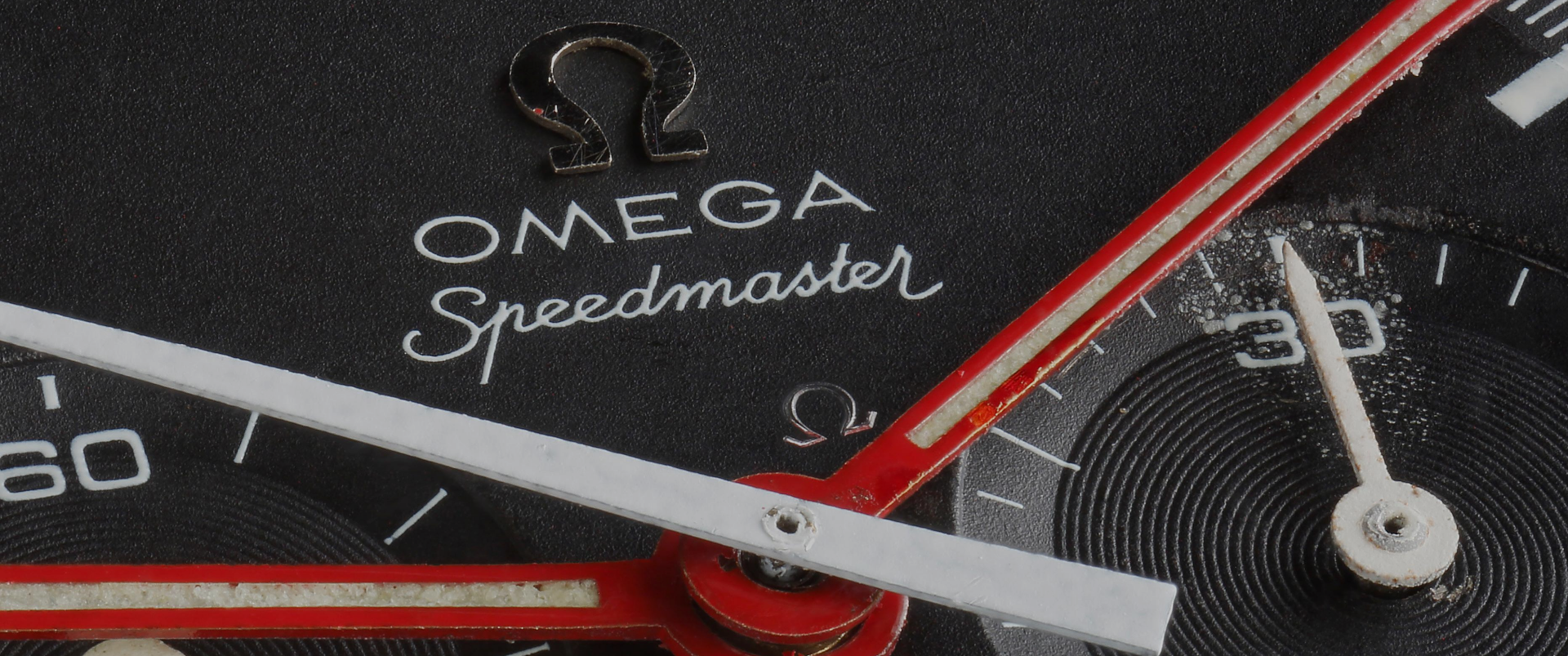
An extraordinary case study is found in the twisted, asymmetrical "lyre lugs" introduced by Omega on the Speedmaster (starting with reference 105.012) and famously adopted on Heuer Carreras. This demanding geometry requires a crisp contrast between polished exterior facets and a deeply brushed internal plane. A single careless polishing pass completely blurs the transition line, reducing a sharp metallic sculpture into an undefined, weakened profile.
3. Pierced Lug Holes
On vintage cases with exposed holes for the bracelet spring bars, the perimeter of the hole must be perfectly flush and perpendicular to the lug's vertical profile. If a case has been buffed on a wheel, the high-speed friction pulls at the edges of the opening, creating a telltale countersunk or "funnel-shaped" distortion. In advanced stages of depletion, the overall thinning of the lug walls causes the tip of the spring bar to protrude noticeably beyond the outer edge of the lug—a definitive red flag for heavy metal loss.
4. Factory Graining (Satin Finish)
The original brushed finish on top of the lugs was executed using specialized machinery that left dense, microscopic parallel grooves of uniform depth. On an untouched case, this graining has a deep, matte appearance and a distinct orientation (often radial or diagonal to the dial). Modern manual touch-ups using abrasive sheets (like Bergeon or Scotch-Brite pads) leave shallow, erratic, or cross-hatched marks lacking the structural crispness of factory tooling.
Market Evolution: From Laser Welding to "Honest Watches"
The market's obsession with unpolished examples has led some restoration workshops to employ advanced laser welding techniques. This process allows restorers to deposit new metal wire (matching the alloy composition) onto worn lugs, which is then reshaped using CNC milling machines to recreate factory bevels.
However, an expert using stereo-microscopy or ultraviolet light can detect the microscopic boundaries separating the original 50-year-old alloy from the modern laser deposit. Elite collectors favor what the industry terms an honest watch: a piece showing superficial hairline scratches and gentle metal oxidation, but whose structural lines remain completely original and un-sculpted by modern hands. Preserving original metal means preserving historical equity.
