


Vintage chronograph calibers: Valjoux 72, Lemania 2310, and Venus 175

When you look at a vintage chronograph, the eye goes to the dial, the registers, the case. But what shapes a chronograph's character, its history and in part its value, is the caliber working beneath the dial. A few names come up again and again: Valjoux, Lemania, Venus. They're the "engines" dozens of brands, some very prestigious, fitted into their chronographs.
In our guide to the difference between in-house and ébauche movements we explained why a supplier movement isn't a flaw. Here we get concrete: the three chronograph calibers you'll meet most often, what sets them apart, and how to read them when you have to decide whether to buy.
What Defines a Chronograph Caliber
Two elements help you get your bearings:
- Manual or automatic winding. The three calibers we discuss are all hand-wound: you wind them with the crown, as on chronographs from the 1930s to the 1960s.
- The control system. A chronograph starts, stops, and resets through a mechanism. In a column wheel, the commands are handled by a wheel with small pillars, a solution traditionally associated with finer, more expensive construction. In the cam version the control is entrusted to a cam with its levers, a simpler and cheaper solution to produce. The Valjoux 72 and the Lemania 2310 use a column wheel; the Venus family adopted both solutions, with the 175 being column-wheel.
Valjoux 72: the Workhorse Chronograph
The Valjoux 72 appeared in 1938. It descends from the Valjoux 22, from 1914, and from the 23, a 12-ligne reduction of the 22: adding a 12-hour counter to the 23 produced the 72, at 13 lignes. The result is a hand-wound, column-wheel chronograph with two pushers and three registers (running seconds, 30 minutes, 12 hours).
Some useful technical facts:
- Frequency: 18,000 vibrations per hour originally, raised to 21,600 around 1969. The source ties this change to hand-wound Rolex Cosmographs made after that date.
- Variants: the 72c added a full calendar in 1946; the 88 added the moonphase as well; the 69 was a miniaturized version used by Gallet; the 71 was a 15-ligne version used in early Heuer Seafarer "tides" models; there were also return-to-zero versions (235, 725) and 12/24-hour counter versions (720).
- Brands: besides Rolex, it was used by Heuer (Carrera, Seafarer), Breitling (Navitimer), Universal Genève (Space-Compax), Gallet, Zodiac, Girard-Perregaux, Eterna, Longines, Wittnauer, and Wakmann. According to the historian Koullapis there were at least 17, possibly 19, manufacturers.
- Production: it ended in 1974, with an estimated total of around 750,000 across all variants — a figure the source itself presents as approximate, since production data can't be reconstructed precisely.
- Spare parts: historically promised for about thirty years after a caliber ended, they are scarce today.
Its role in the Daytona story is told in our piece on the Rolex Daytona Paul Newman and in the guide on in-house vs ébauche: what interests us here is what the 72 teaches about the market. Because so many brands used it, you find it across very different value tiers, and the caliber alone says nothing about price: reference, dial, and overall condition are what count.
Lemania 2310: the Compact Chronograph of the Great Names
The Lemania 2310, known during development as the CH 27, was developed starting in 1942 from a project by Albert Gustave Piguet. At the time it was described as the world's smallest chronograph movement. It measures 27 mm in diameter by 6.74 mm in height.
- Versions: the three-register version (2310, or CH 27-12P) has 17 jewels; there is also a two-register version (CH 27-17P) and the 2320, with 21 jewels and a swan-neck regulator.
- Construction: hand-wound, column wheel, 18,000 vibrations per hour originally; some brands later raised the frequency to 21,600.
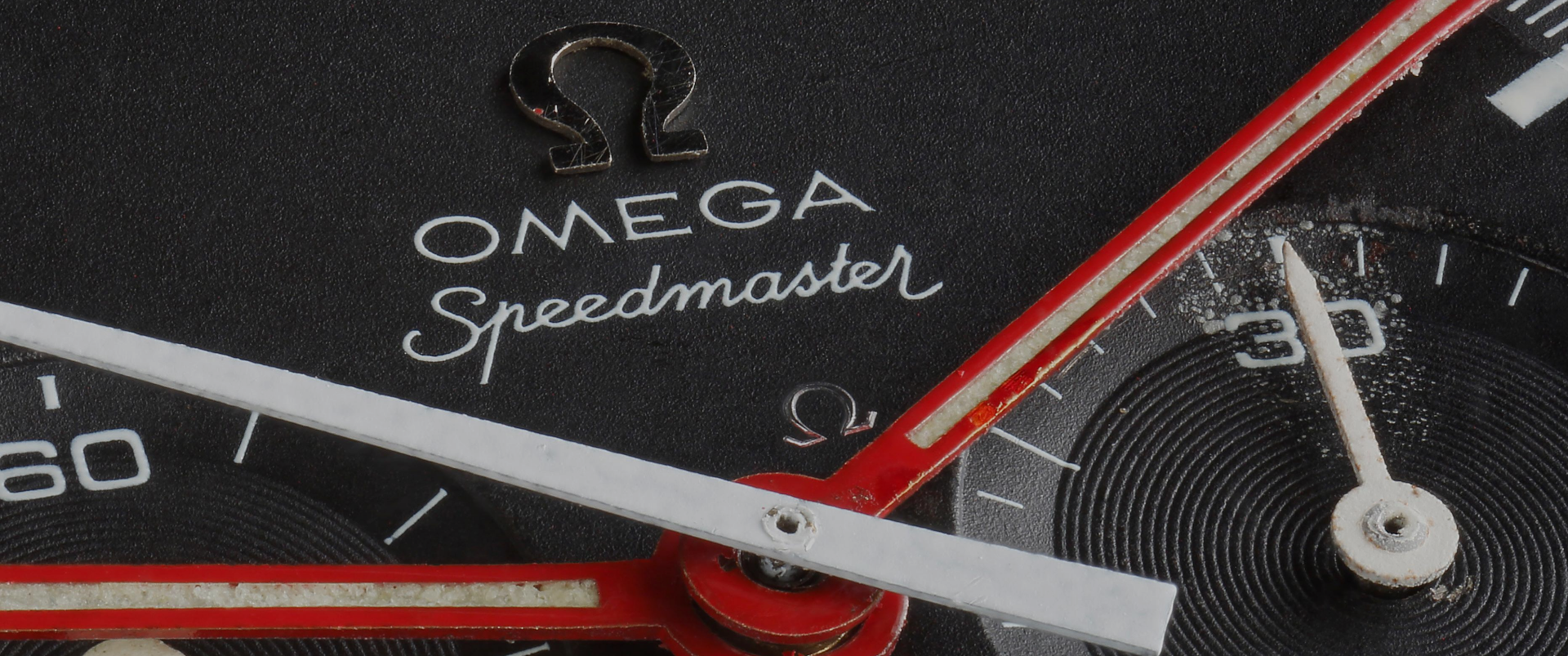
- Omega: made its own version, the Caliber 321, from 1946; it's the heart of the Speedmasters from 1957 to 1968 that we covered in the Pre-Moon reference guide.
- Other names: the same architecture was adopted by Patek Philippe (including the 3970 from 1985 and the 5070 from 1998), Vacheron Constantin (from 1989), Breguet, and Roger Dubuis.
Why do collectors value it? The source cites adaptability to different cases and configurations, reliability, the role it played in the Swiss industry's recovery after the quartz crisis, and the column-wheel construction, which is highly adjustable.
Venus 175: Breitling's Chronograph
The Venus family is less known to the general public, but central to many chronographs of the 1940s and 1950s. The Venus 175 was introduced in the early 1940s (dates given by sources range from 1940 to 1942): a 14-ligne, column-wheel, two-register chronograph. We find it, for example, in the Breitling Chronomat 769, of which 1940s examples exist.
The Venus 178 is its three-register variant, with the 12-hour totalizer, and is the caliber of the Breitling Navitimer 806. A detail that tells you a lot about the industrial logic of the era: according to the source, Breitling found the Valjoux 72 too expensive and fell back on the Venus 178 in the late 1950s; when Venus ran into supply shortages in the early 1960s, some Navitimers were built with the Valjoux 72.
According to some sources, Venus was absorbed by Valjoux in 1966, and production of the 170, 175, and 178 ended that year. That's one more reason to raise spare parts with your watchmaker before buying.
Three Calibers Compared
| Caliber | Year | Registers | Control | Typical brands |
|---|---|---|---|---|
| Valjoux 72 | 1938 | 3 (seconds, 30 min, 12 hr) | Column wheel | Rolex, Heuer, Breitling, Universal Genève and many others |
| Lemania 2310 / CH 27 | Developed from 1942 | 3 (2310) or 2 (CH 27-17P) | Column wheel | Omega (321), Patek Philippe, Vacheron Constantin, Breguet |
| Venus 175 / 178 | Early 1940s | 2 (175), 3 (178) | Column wheel | Breitling |
How to Read the Caliber When You Buy
- The caliber must be consistent with the reference and the era. On hand-wound Rolex Cosmographs, for example, the frequency goes from 18,000 to 21,600 around 1969: a movement that doesn't respect that timeline deserves a closer look.
- Ask for photos of the movement. Bridges, engravings, and screws say a lot, and a trusted watchmaker can open the case back and confirm caliber and condition.
- Weigh the service history. With scarce spare parts, an original but never-serviced movement is a cost to budget for: we cover this in the guide to cleaning and maintenance.
- Look at the serial number. To work out the year a watch was produced, see our guide to serial numbers.
- Judge the whole. A good caliber inside a watch with inconsistent parts isn't a good purchase: the logic is the one in our guide on how to spot a fake vintage watch.
- Don't fear the ébauche. A correct Valjoux or Lemania, consistent with the reference and in good condition, doesn't reduce value: it's part of the watch's story.
A Dealer's Perspective
People buying a vintage chronograph tend to look at the dial first, but we always open the question of the movement: which caliber is fitted, whether it's consistent with the era, what condition it's in, when it was last serviced. These are questions you ask once, and they protect the purchase for years.
To see these calibers in real pieces, you can browse the Heuer, Rolex, Omega, and other brands collections. For an example of how a chronograph also tells the story of its own era, see the Heuer Carrera 1158 CHN.
