


Vintage watch dial makers: the historic cadraniers behind collector value

Throughout the 20th century the Swiss watch industry ran on a fragmented, hyper-specialized supply chain that has almost nothing in common with today's vertically integrated manufactures. Legendary houses such as Rolex, Omega, Heuer, Patek Philippe and Universal Genève acted mainly as designers, movement adjusters and assemblers, orchestrating an elite network of independent component suppliers — the fournisseurs — under a production system known as établissage. Within that network, dial-making (habillage) was the most secretive and technically demanding craft of all, sitting at the intersection of electrochemistry, micro-typography and fine jewelry.
Identifying the specific workshop that physically stamped and finished a vintage dial is the master key to decoding the "Mark" (MK) classifications and micro-variants that drive astonishing price differentials on the international market. A single, almost invisible typographic detail can separate an ordinary watch from a blue-chip collectible.
The chemistry of the vintage dial
A mid-century dial passed through dozens of coordinated manual operations. The raw brass blank was treated in galvanic baths to fix a chemically stable background — silver satin, matte black, or a warm gilt tone — then sealed with a protective lacquer (often a Zapon-type varnish). Graphics were applied by pad printing (tampographie), using hand-engraved steel clichés to deposit viscous ink with micrometric precision. Sub-dials were frequently finished with concentric engine-turning known as azurage. Very few workshops could hold these tolerances at scale, which is why a handful of suppliers came to dominate the high end.
Luminescent material is itself a dating tool: early dials used radium, replaced industry-wide by tritium by the 1960s, then by non-radioactive Luminova (from 1998), Super-LumiNova, and finally Chromalight (from 2008). Matching the lume type to a watch's serial range is one of the first checks any serious collector makes.
The Great Cadraniers of Golden-Era Horology
Three names dominate the conversation — Singer, Stern Frères and Beyeler — but they were never alone. Lemrich, ZJ and Métalem also supplied dials to top houses, and Rolex alone drew on several of them at once. Keeping the wider ecosystem in view matters, because attribution is exactly where myths take root.
1. Jean Singer & Cie — La Chaux-de-Fonds
Founded in 1919, the Singer workshop is the hidden signature behind some of the most radical and coveted dial layouts of the modern era. Singer specialized in stark chromatic contrasts and multi-layer surface depth, and its client list read like a roll call of 20th-century watchmaking: Rolex, Heuer, Omega, Universal Genève, Tudor and Longines, plus a long tail of accessible brands (Bulova, Zodiac, Yema and others).
The "Paul Newman" legacy. Singer is the maker behind the Rolex "exotic" dials — later nicknamed "Paul Newman" — fitted to the Cosmograph Daytona (references 6239, 6241, 6262, 6263 and the waterproof 6240/6265 generation). Telltale Singer traits include three sub-dials sitting on a distinct physical step below the main dial plate, fine concentric azurage in the registers, and Art Deco numerals with small square-tipped hash marks. These dials were initially unpopular and often swapped out — only to become the most replaced (and forged) detail in vintage Rolex once prices exploded.
Authentication detail. Genuine Singer dials carry an embossed SINGER signature on the reverse. The typeface evolved from rounded early lettering to a more angular form, sometimes repeated across the surface, occasionally framed by plus signs. Counterfeiters routinely fake this stamp, so the style of the signature — not merely its presence — is what experts scrutinize.
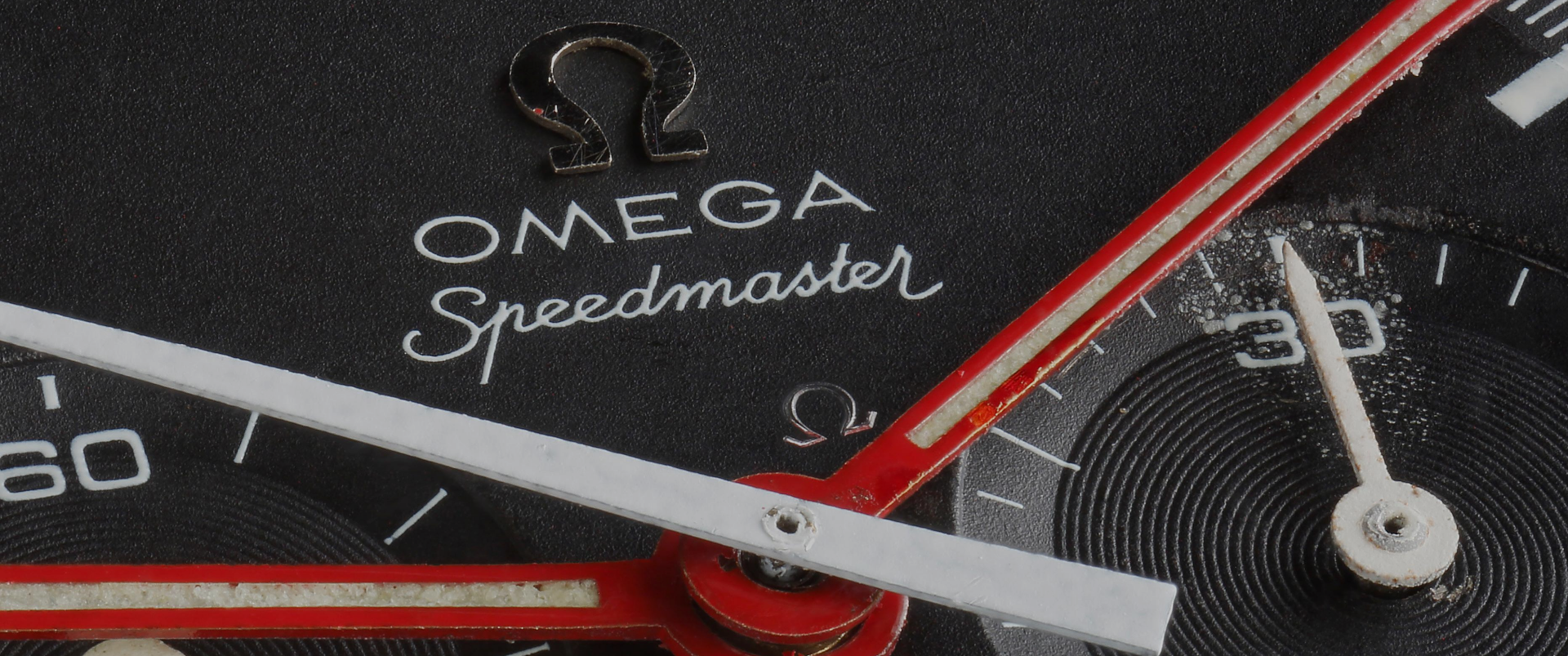
Other iconic layouts. Singer produced the dials of the first Heuer Carrera (ref. 2447), whose variants carried tachymeter, pulsometer and decimal scales (the N, S, NT, T, P and D executions). Because Heuer and Rolex sourced dials from Singer and movements from Valjoux, early Carreras share a clear family resemblance with pre-Daytona Rolex references (6034, 6234, 6238). Singer's catalogue archives also include vivid Omega Speedmaster designs, tying the workshop to the racing-style and prototype Speedmaster dials prized today.
2. Stern Frères — Geneva
The Stern family is one of the most powerful dynasties in Swiss horology. Operating as Fabrique de Cadrans Stern Frères (today known as Stern Creations), the firm mastered enamel work (champlevé and cloisonné), diamond-polished applied markers and impeccable sunburst (soleil) finishes. Their mastery was so complete that in 1932, at the depth of the Great Depression, brothers Charles and Jean Stern — already Patek's dial suppliers — bought Patek Philippe outright, appointing Jean Pfister to lead it and pushing the firm toward full in-house movement production. The Stern family has owned Patek Philippe ever since.
Authentication detail. Stern stamped the back of its metal plates with a proprietary hallmark: a five-pointed star paired with a numeral (collectors document examples such as "93 ★"). The star is the recurring signifier; the number varies. This mark underpins academic authentication of dials on early Patek references including the Calatrava 96, the 1463, and complicated calendar chronographs such as the 1518 and 2499, as well as later pieces like the perpetual calendar 3940.
Elite clientele. Beyond Patek, Stern Frères supplied other prestige houses for their most complicated calendar and chiming watches, and Stern-made Art Deco dials also turn up on American-market pieces from brands like Longines and Gruen — a reminder of how widely these workshops cast their net.
3. Beyeler — Geneva
Beyeler was one of Rolex's important dial suppliers during the golden era of steel sports watches, working alongside Singer, Lemrich and ZJ. Genuine Beyeler dials are signed on the reverse with the "Beyeler" name engraved in an italic capitalized script, sometimes repeated across the surface.
Beyeler's place in Rolex history is sealed by what happened in 2000: as Rolex pursued vertical integration, it acquired Beyeler to bring dial production in-house — part of the same acquisition wave that absorbed case maker Genex, bracelet specialist Gay Frères (1998), crown maker Boninchi and the case-finishers Virex et Joli Poli. After Beyeler, Rolex consolidated dial manufacturing at its Chêne-Bourg facility.
A note on the Submariner "Maxi" dials. The celebrated Maxi dials of the Submariner ref. 5513 (roughly 1977 to the mid-1980s) feature oversized tritium plots for underwater legibility, and collectors classify them as Mark I through Mark V. These marks are distinguished by the position and length of "SUBMARINER" relative to the depth rating and by the size of the lume plots — the Mark III, with plots so large they nearly touch the minute track, earns the nickname "Lollipop." Crucially, these are collector classifications of Rolex production, not the trademark of any single supplier; documented Submariner dials were produced by more than one cadranier. Treating the Mark taxonomy as a Beyeler "signature" is a common but unsupported shortcut, and serious authentication relies on the back-stamp and period-correct details rather than the marketing folklore.
At a Glance: The Historic Dial Makers
| Cadranier | Base | Founded | Reverse signature | Signature work | Later fate |
|---|---|---|---|---|---|
| Jean Singer & Cie | La Chaux-de-Fonds | 1919 | Embossed "SINGER" (rounded → angular) | Daytona "Paul Newman", Heuer Carrera 2447, Omega Speedmaster | One of the last independent Swiss dial makers |
| Stern Frères | Geneva | early 1900s | Star + numeral (e.g. "93 ★") | Patek Calatrava 96, 1518, 2499, 3940 | Bought Patek in 1932; now "Stern Creations" |
| Beyeler | Geneva | — | Engraved italic "Beyeler" | Rolex steel sports dials | Acquired by Rolex in 2000 |
| Lemrich / ZJ / Métalem | Switzerland | — | Name/code stamps | Various Rolex & prestige dials | Independent / absorbed over time |
Why Micro-Variants Drive Value
Understanding the role of independent dial makers like Singer, Stern and Beyeler is essential for anyone navigating the vintage market with confidence. The gap between a standard timepiece and a trophy investment piece often comes down to a nearly invisible detail stamped decades ago: the shape of a Singer signature, the angle of a Stern star, the exact wording above a depth rating. Recognizing these micro-variants — and resisting the tidy myths that grow up around them — is the real secret to assessing both the historical equity and the financial value of a vintage watch.
Frequently Asked Questions
Who made the Rolex "Paul Newman" Daytona dial? Jean Singer & Cie of La Chaux-de-Fonds. Rolex called them "exotic" dials; collectors later renamed them after Paul Newman, who wore one. Genuine examples carry an embossed Singer signature on the back.
Did Stern Frères really own Patek Philippe? Yes. Charles and Jean Stern, owners of the dial maker Stern Frères and already Patek's suppliers, acquired Patek Philippe in 1932 during the Great Depression. The Stern family still owns it.
What is a Submariner "Maxi" dial? A series of late matte dials on the Rolex Submariner ref. 5513 (c. 1977–mid 1980s) with oversized lume plots, classified by collectors as Mark I–V according to text placement and plot size. The Mark III "Lollipop" is the most sought-after.
How can I tell which workshop made a vintage dial? By the stamp on the dial's reverse — Singer's embossed name, Stern's star-and-number, Beyeler's engraved italic script — combined with period-correct lume, font and finishing. Because these stamps are frequently forged, attribution should always be confirmed by a specialist.
When did Rolex start making its own dials? In 2000, when it acquired the cadranier Beyeler, as part of a broader vertical-integration push that also brought case, bracelet and crown production in-house.
